Histoiry of the legendary YZF-R1
Prior to the R1, the first generation CBR900RR Fireblade was introduced in 1992 with an 893 cc inline-four engine. It set a precedent for lightweight in the superbike class, being much lighter than other large-displacement bikes of the time . Then Kawasaki ZX-9R and Suzuki GSX-R 750 were very good superbikes but YAMAHA had the YZF 1000 ThunderAce launched in 1996 which was not a superbike. At this time, there was no superbike 1000 cc inline-four on the market.
Then in 1998 Yamaha set a new precedent for lightweight, powerfull, in the superbike class, disrupted this established order by opening the era of ever more radical sports motorcycles. Yamaha decides to make no concessions by giving its development team three clear objectives: the most power, the least weight, and the greatest possible compactness.
"No compromise": since 1996, this is the leitmotif of the working group which will create the YZF-R1.
Kunihiko Miwa, the man behind the R series, has just been promoted to project manager for “a new supersport machine”. Mario Inumaru, head of R&D and responsible for the entire European market, supports the idea of a truly radical machine. Mr. Miwa informs the planners that the design of a new 4-cylinder engine has begun and that he is keen to integrate it into this chassis so that they form a single unit, in order to create the lightest and most compact motorcycle in its category.
Miwa-san accepts the difficult task of meeting set objectives: 150 hp, less than 180 kg and handling worthy of a 600 cm3.
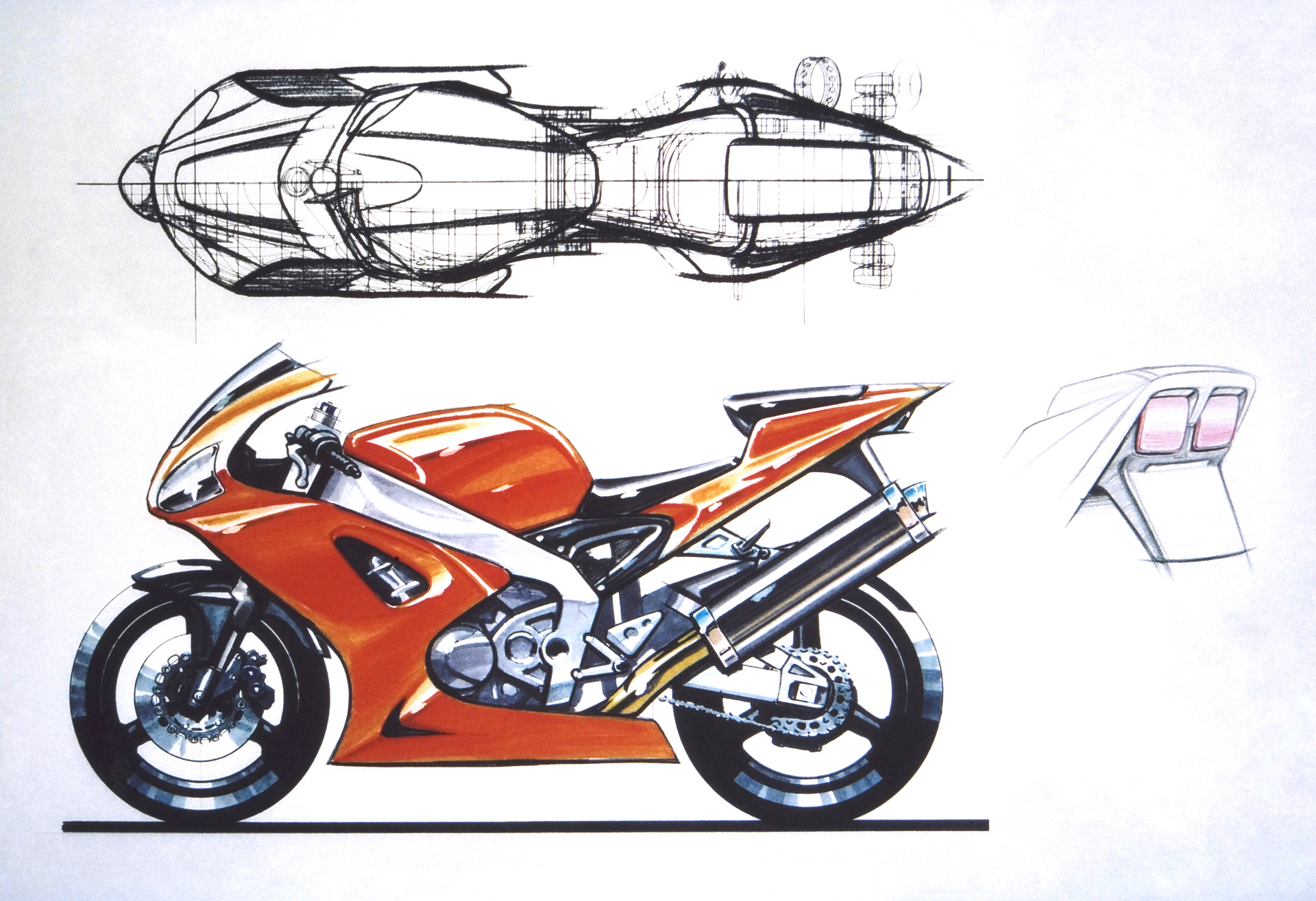
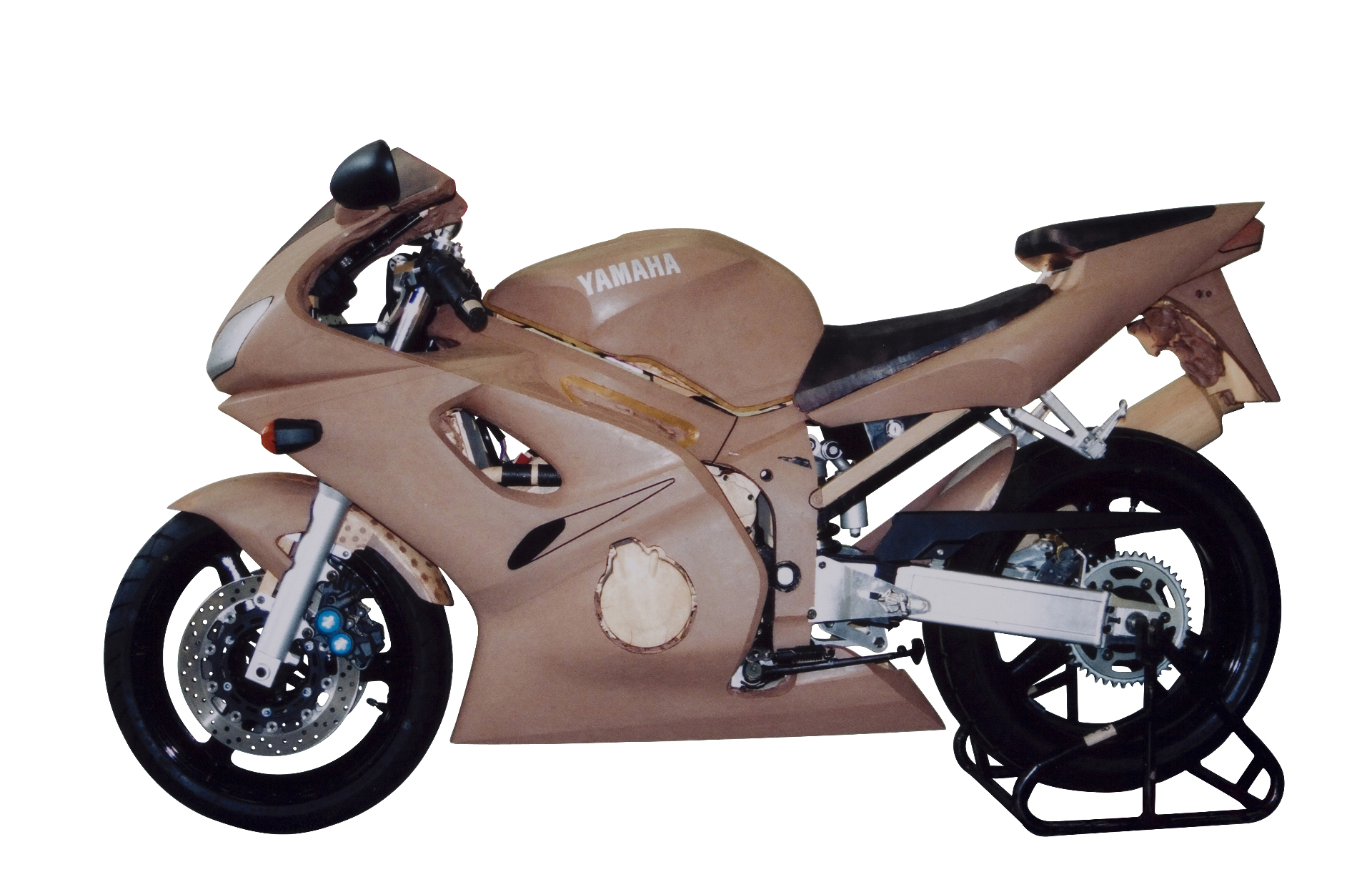
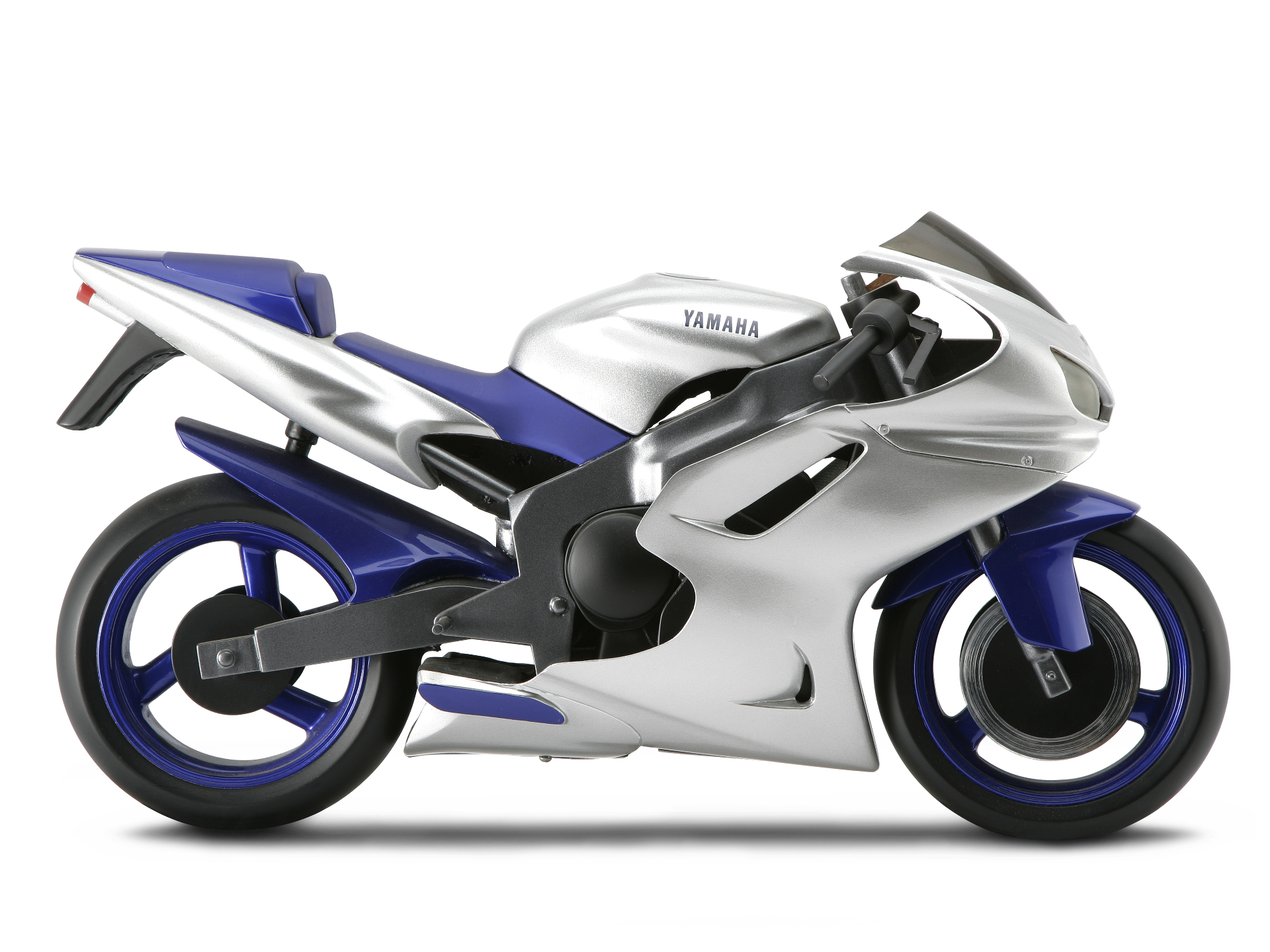
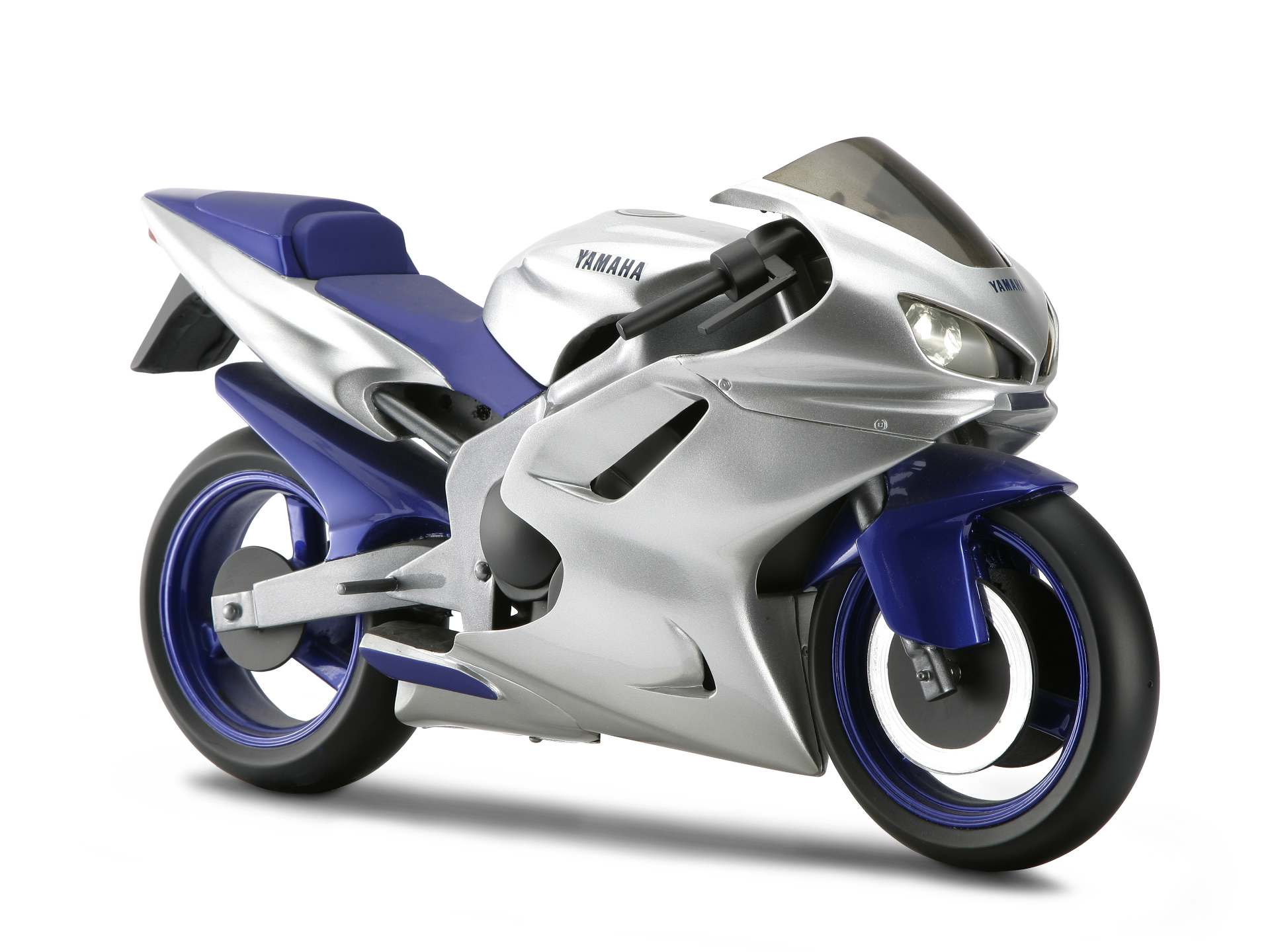
September 1997 R1 has been unveiled at the Milan motorcycle show (EICMA)
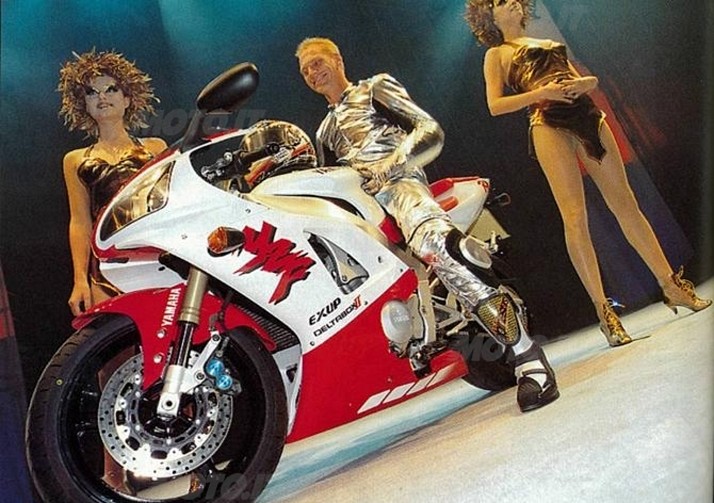
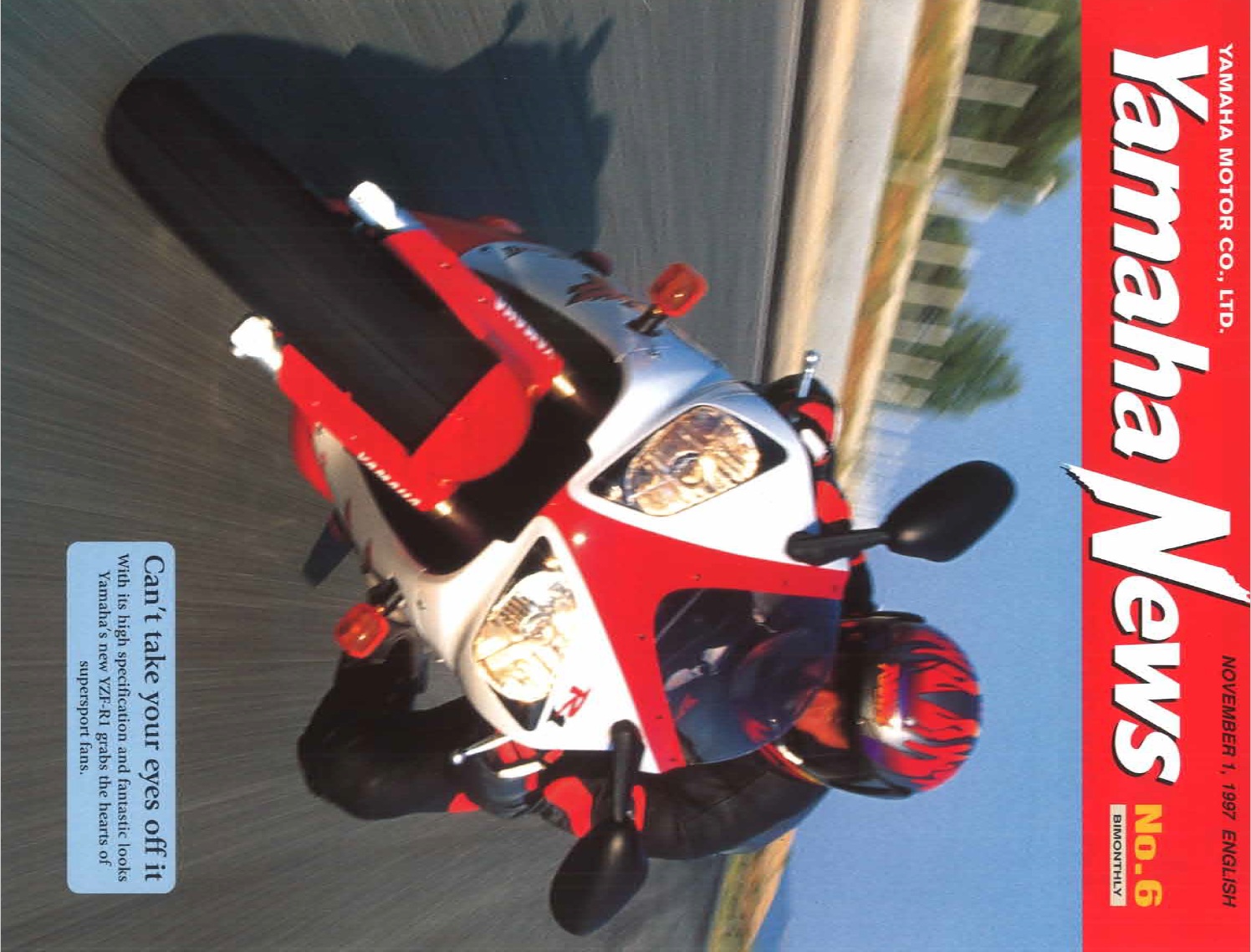
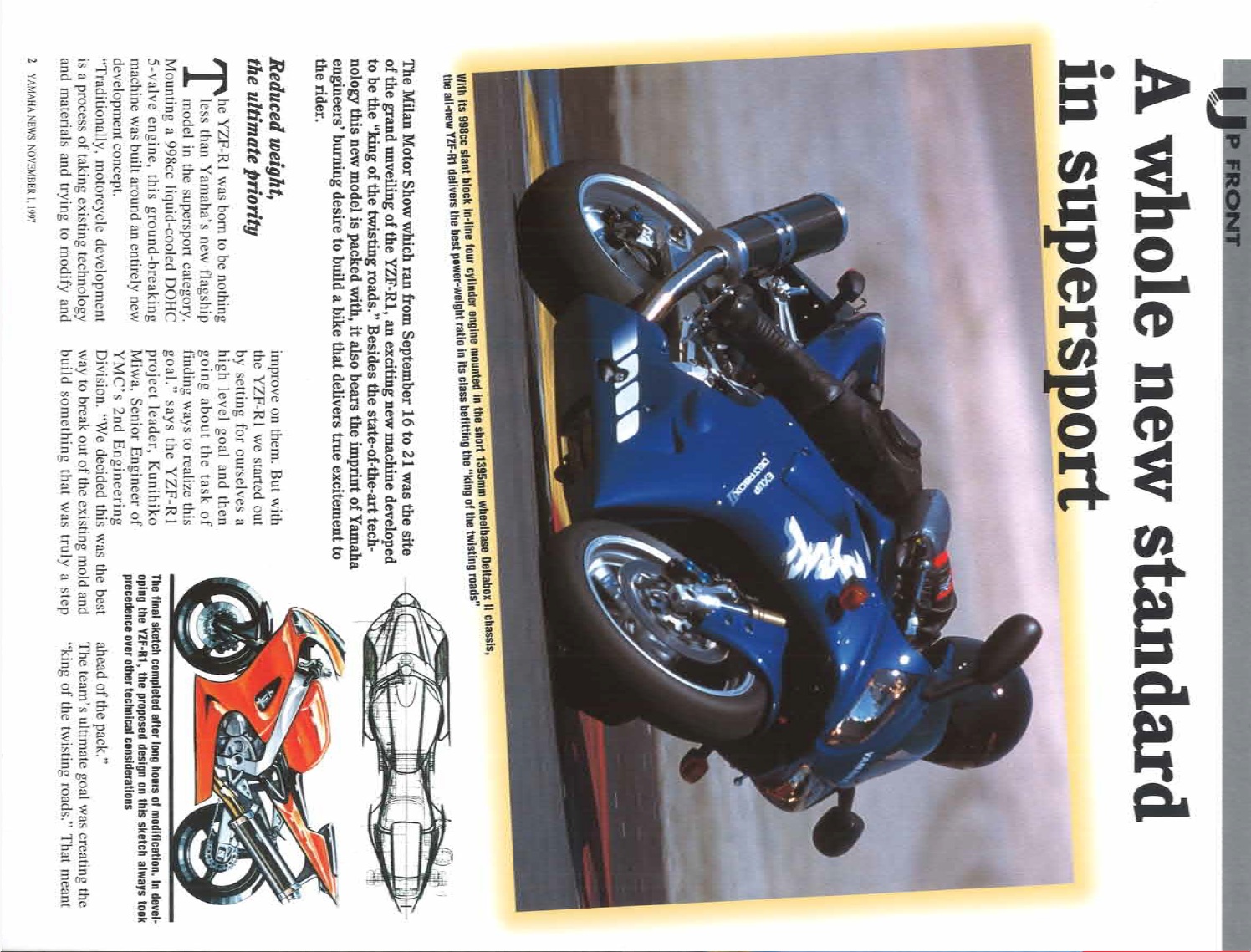
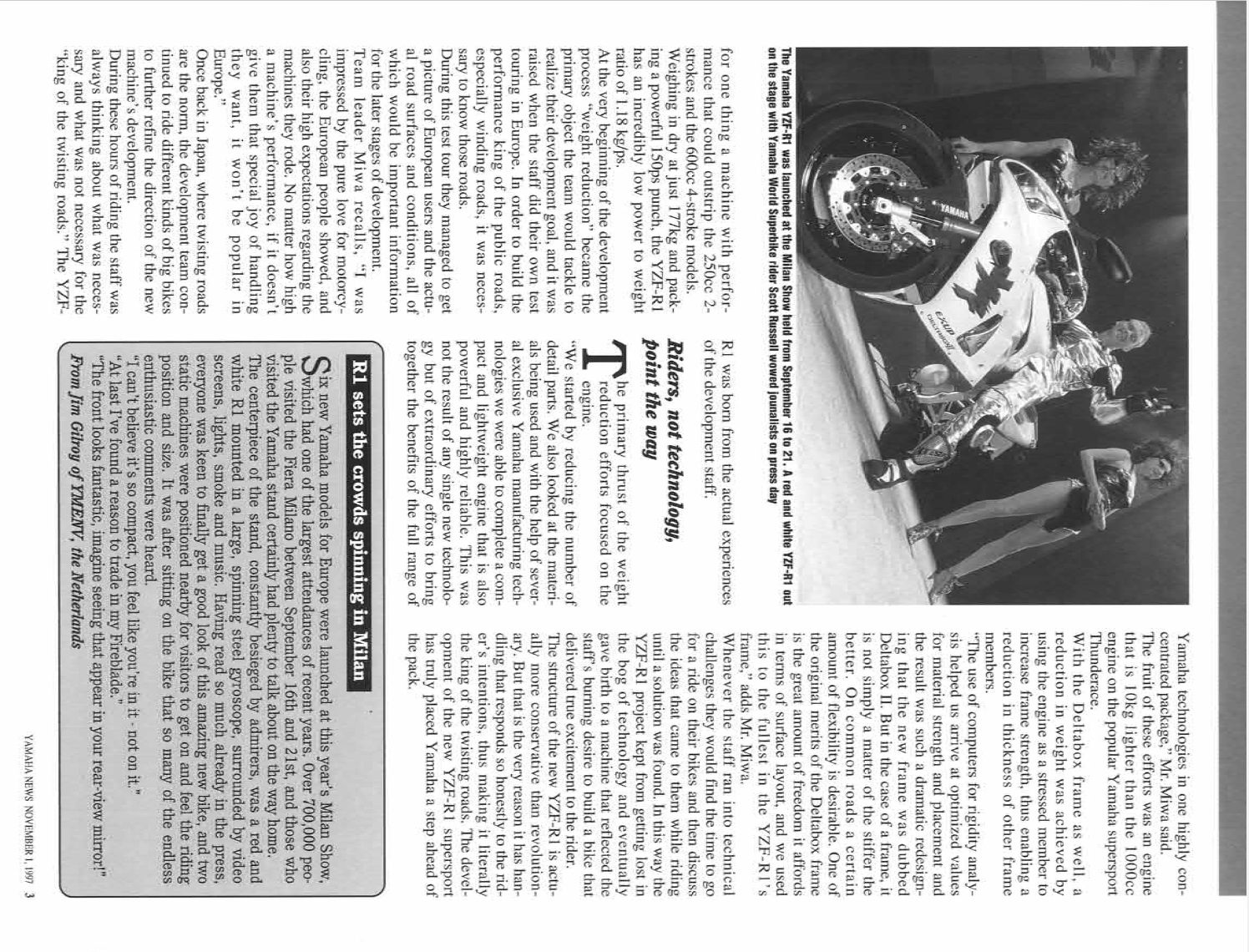
YAMAHA News: presentation of the R1 at 32nd Tokyo motor show in october/november 1997
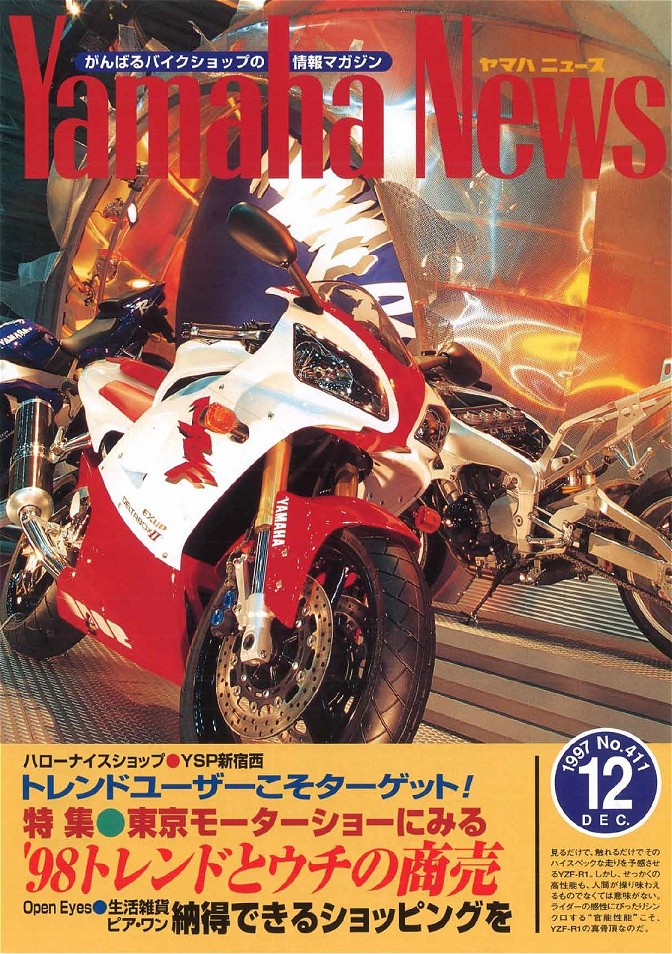
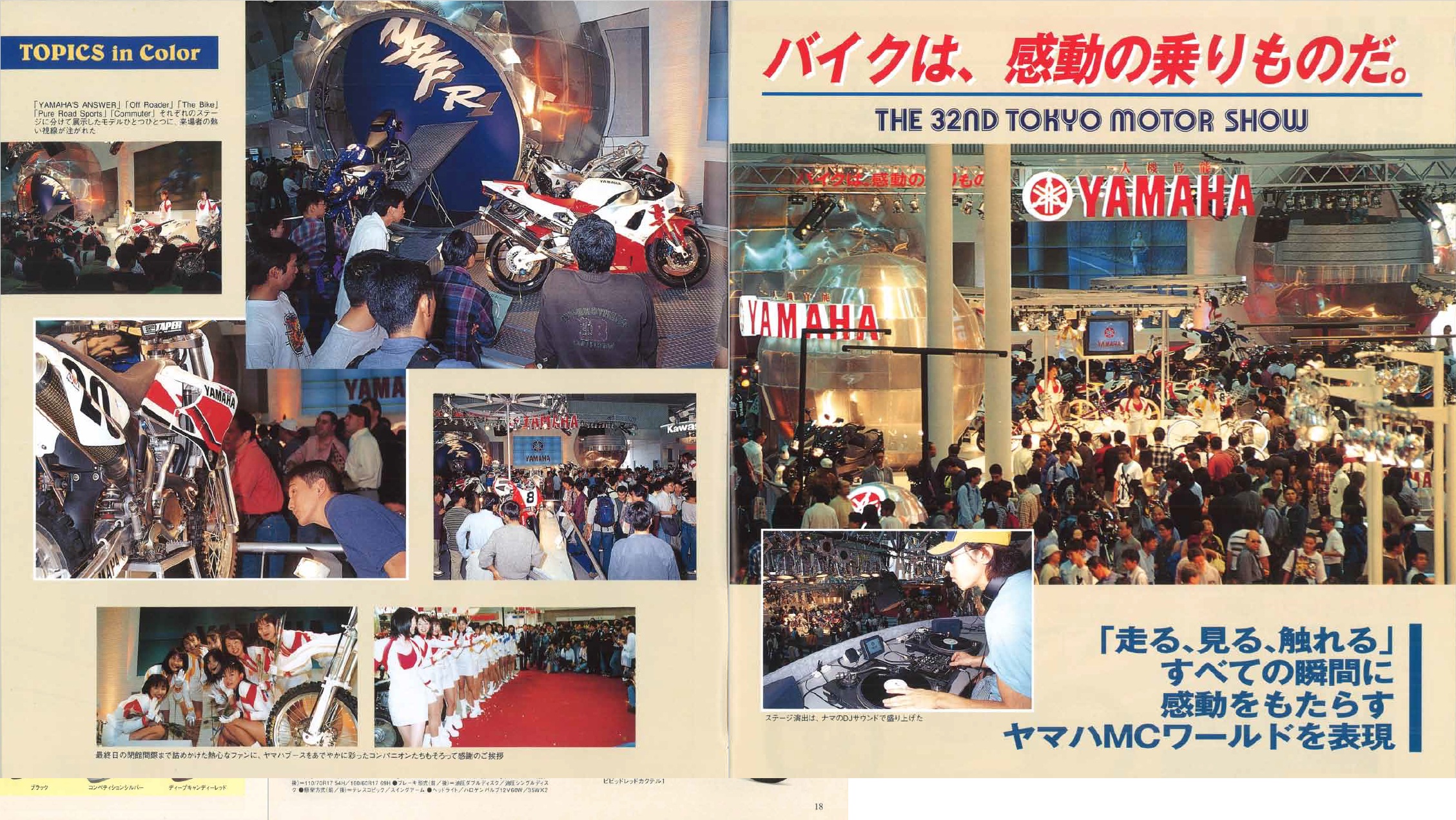
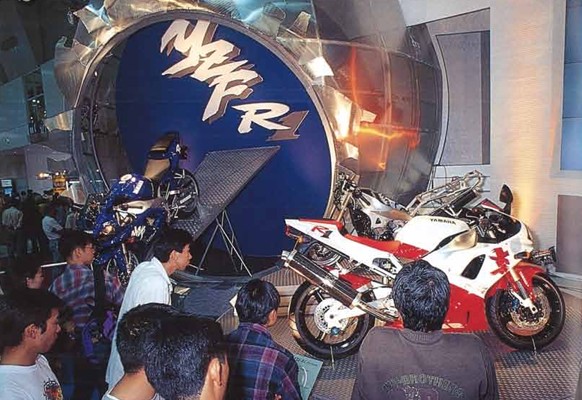
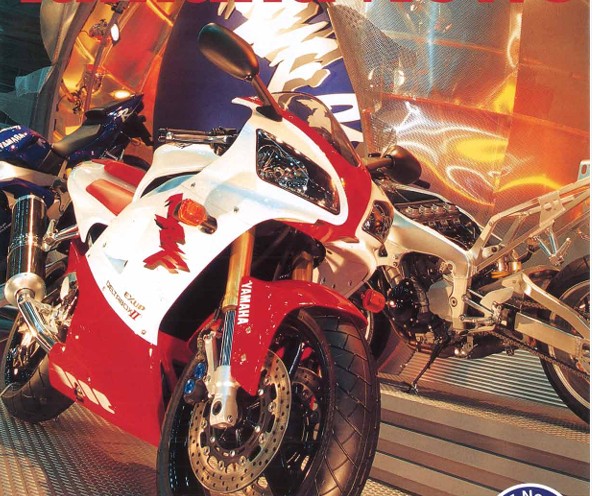
1998 model
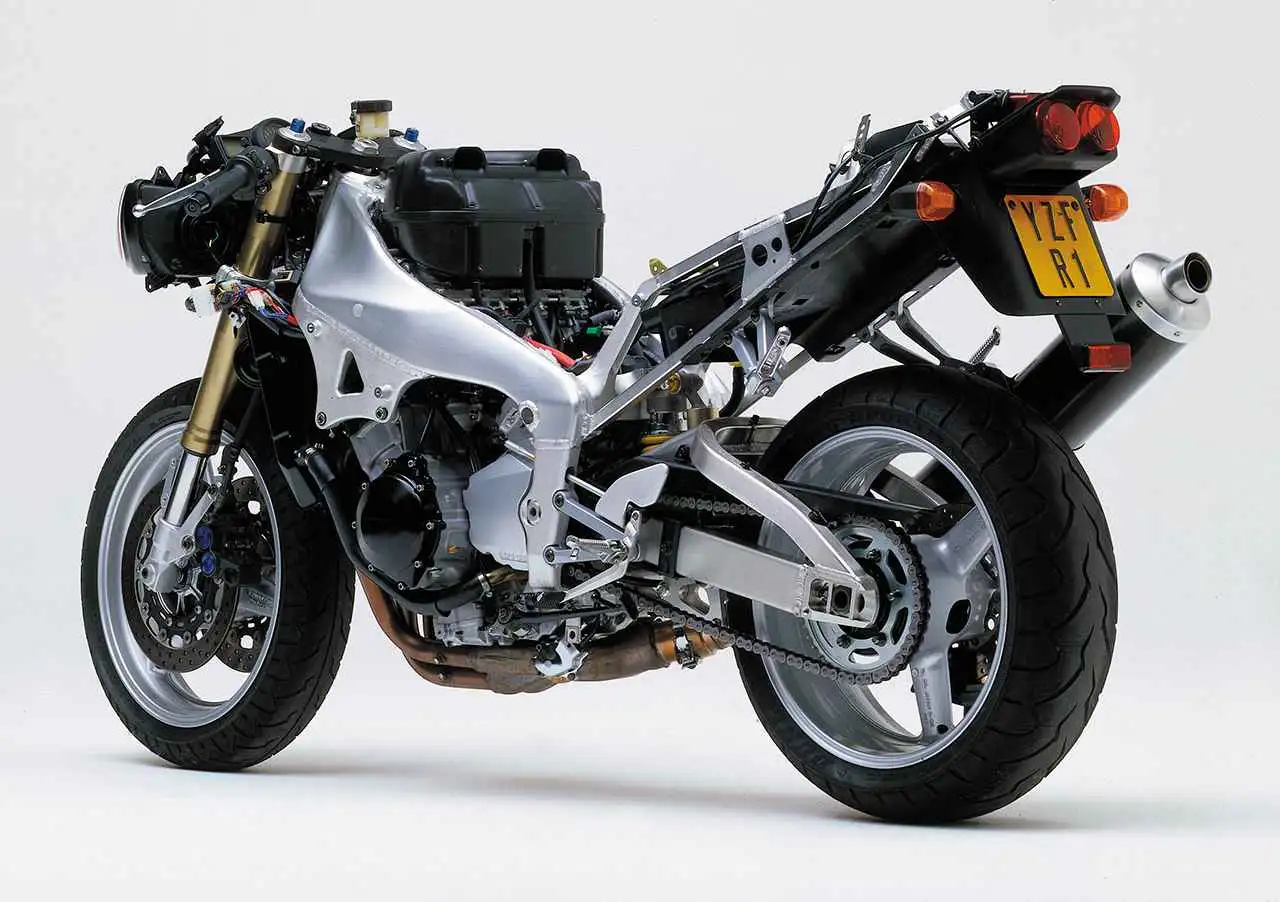
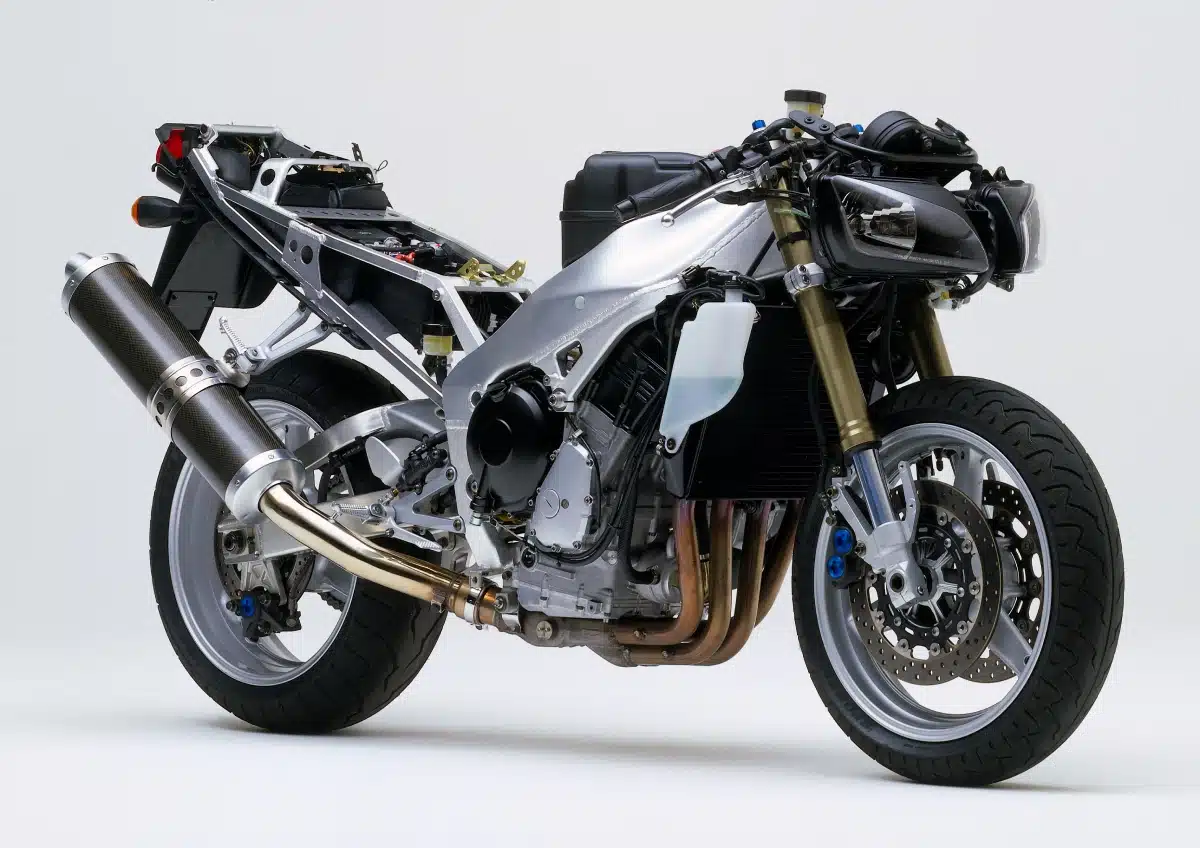
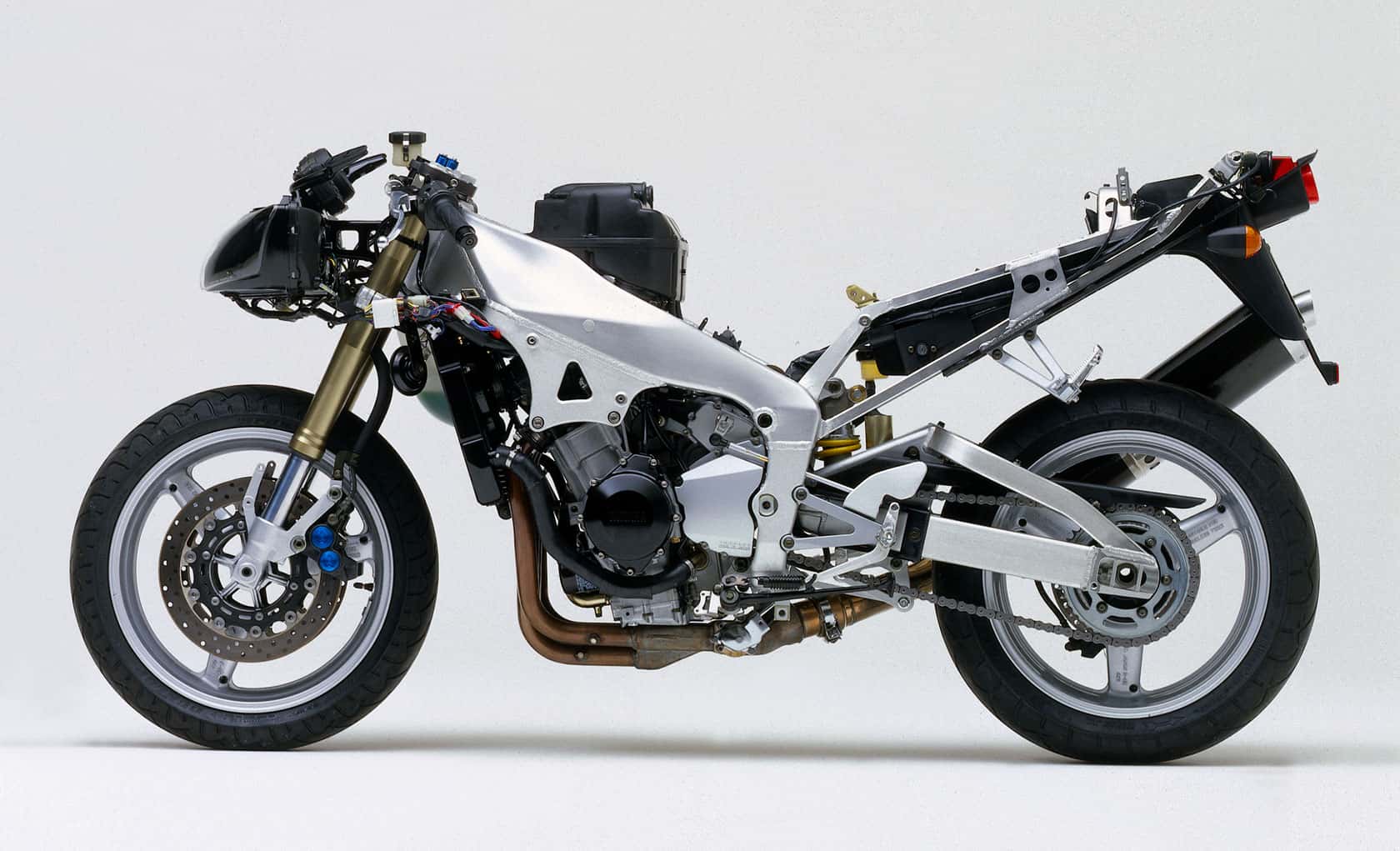
This first YZF-R1 generation produce 150 hp (limited to 100 hp for France) for 177 kg dry.
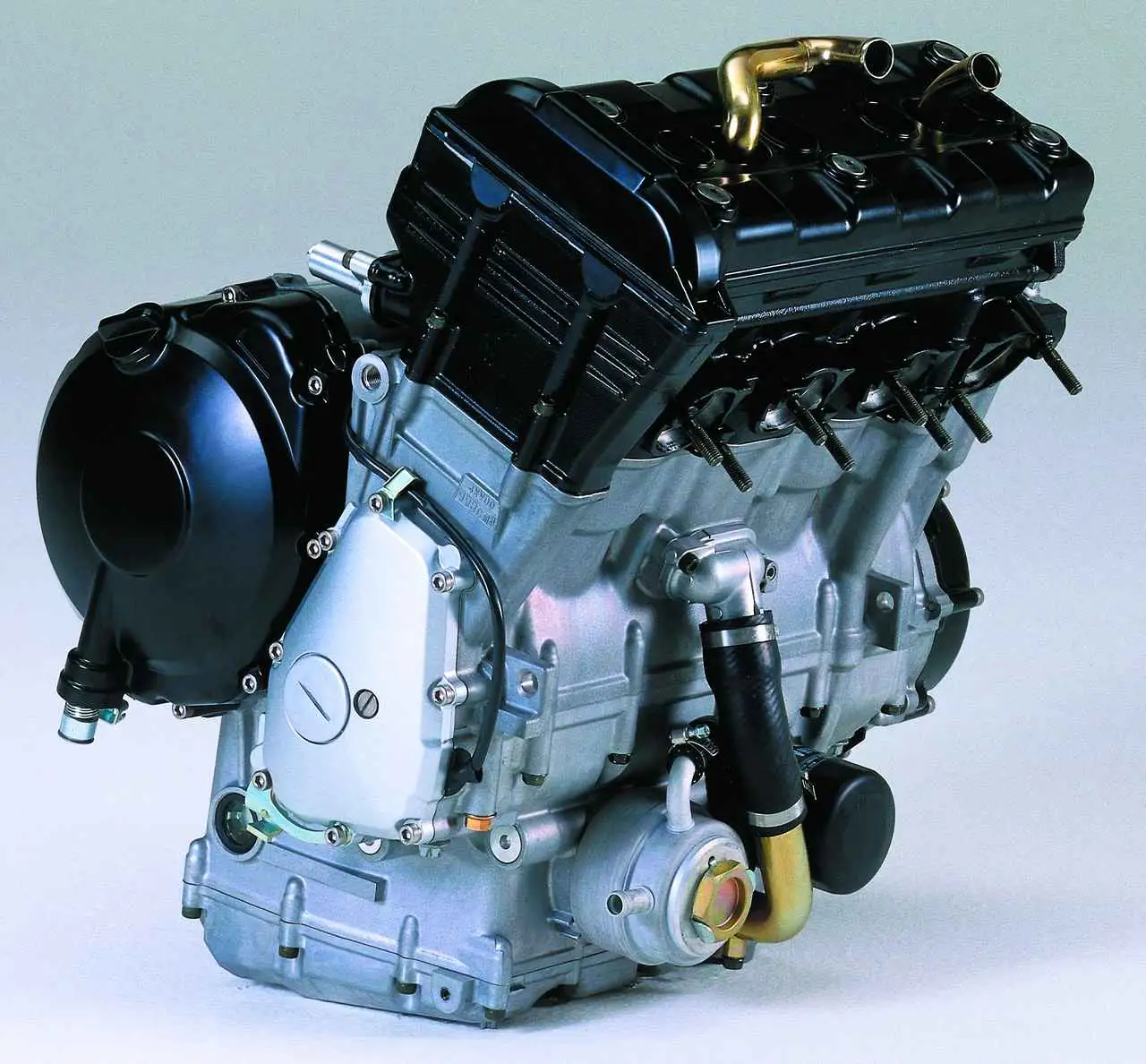
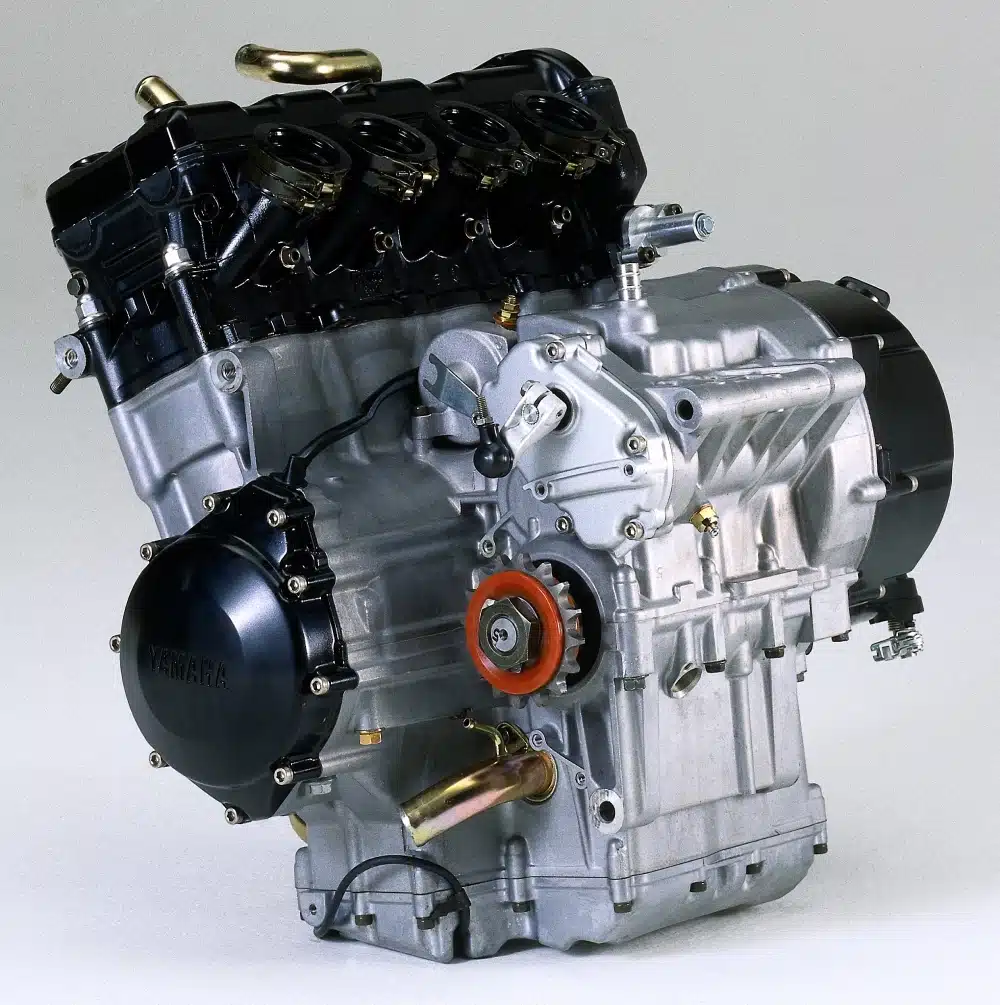
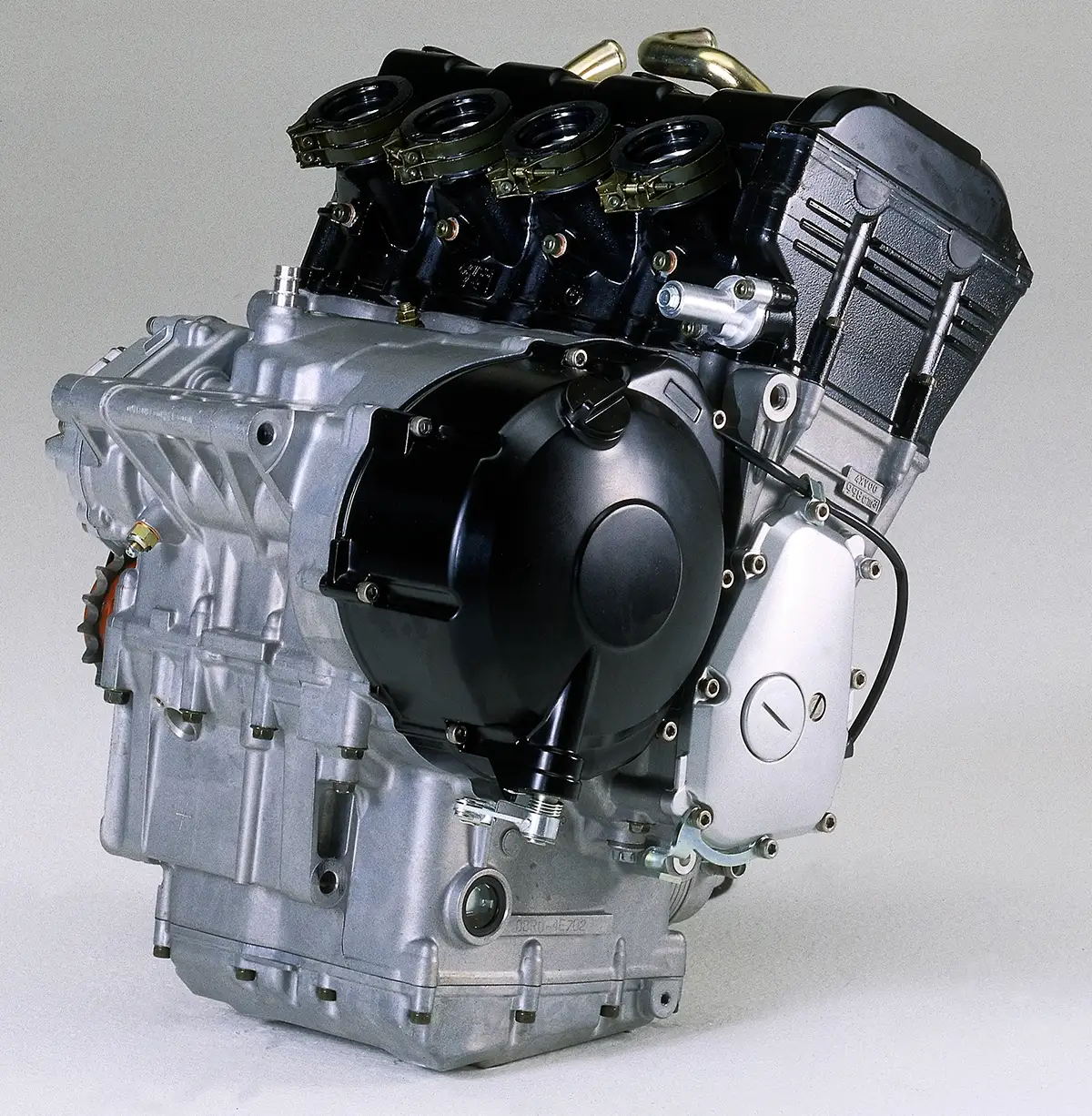
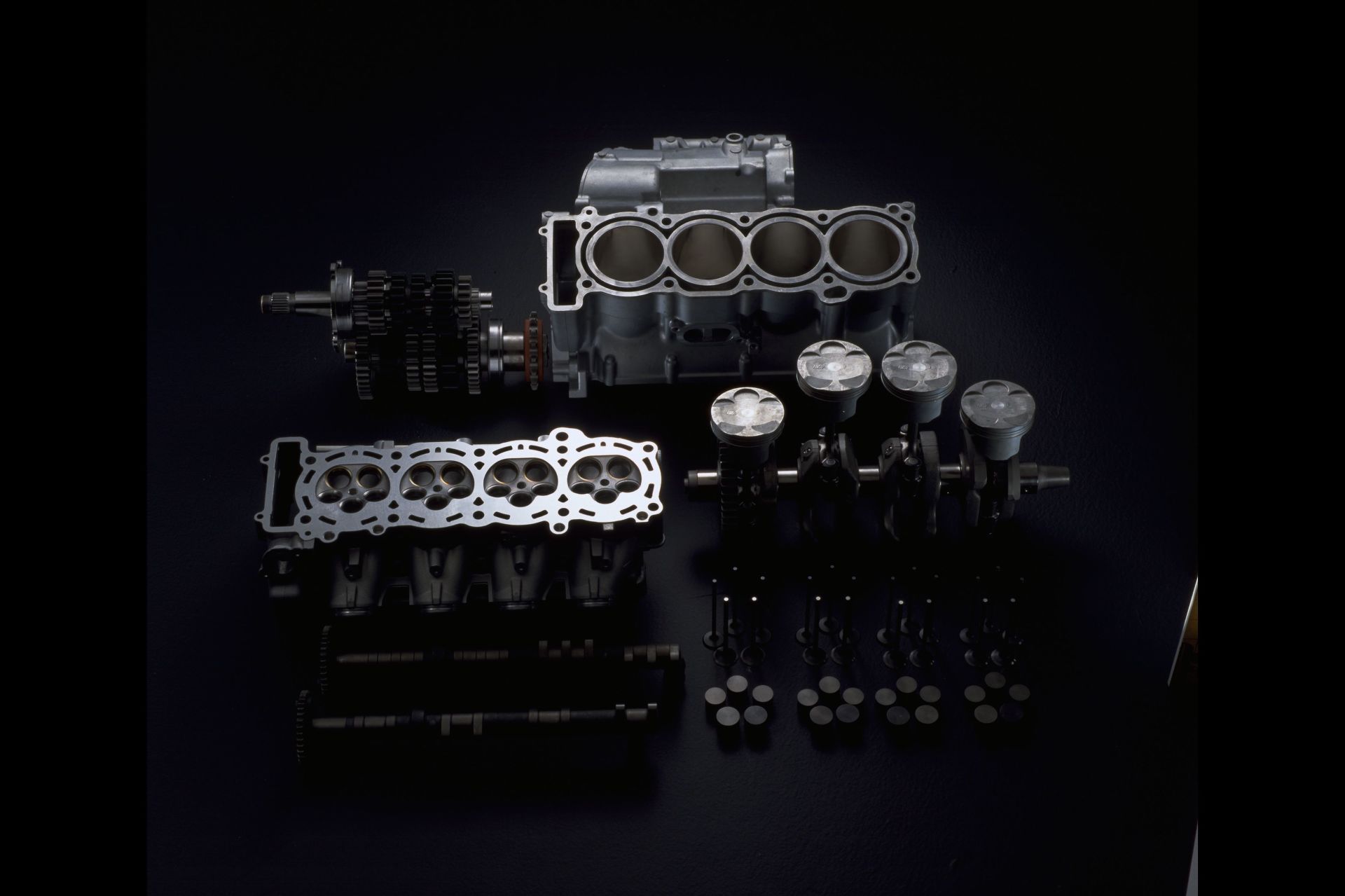
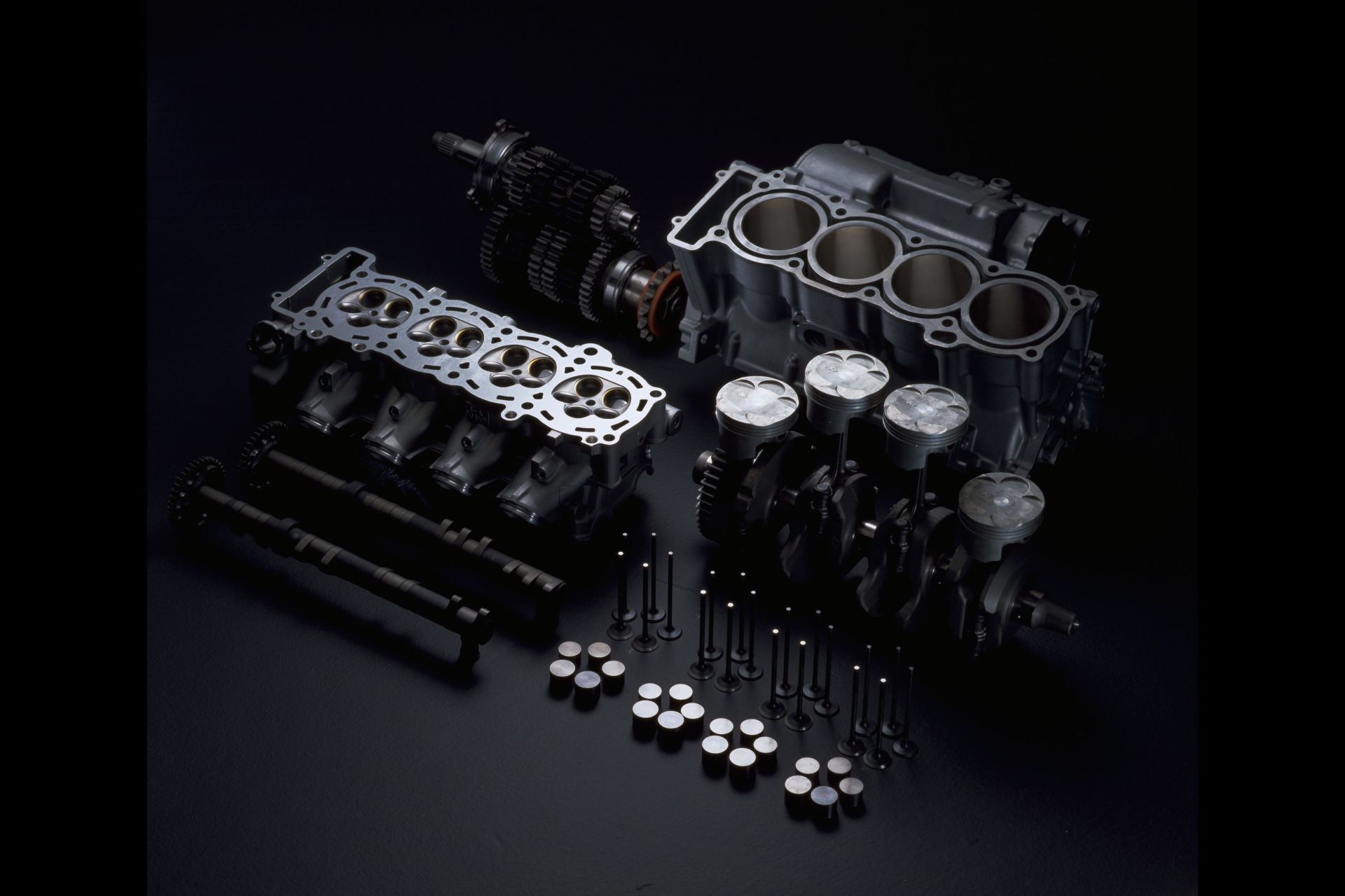
The engine is a 998cc liquid-cooled inline-four engine with 5 valves per cylinder (Genesis concept launched by Yamaha on the FZ 750 in 1985), supplied by vertical 40 mm carburators and exhaust has EXUP valve developped by Yamaha to increase performances in middle range. Compression ratio is 11,8 to 1 bore by stroke is 74 x 58 mm.
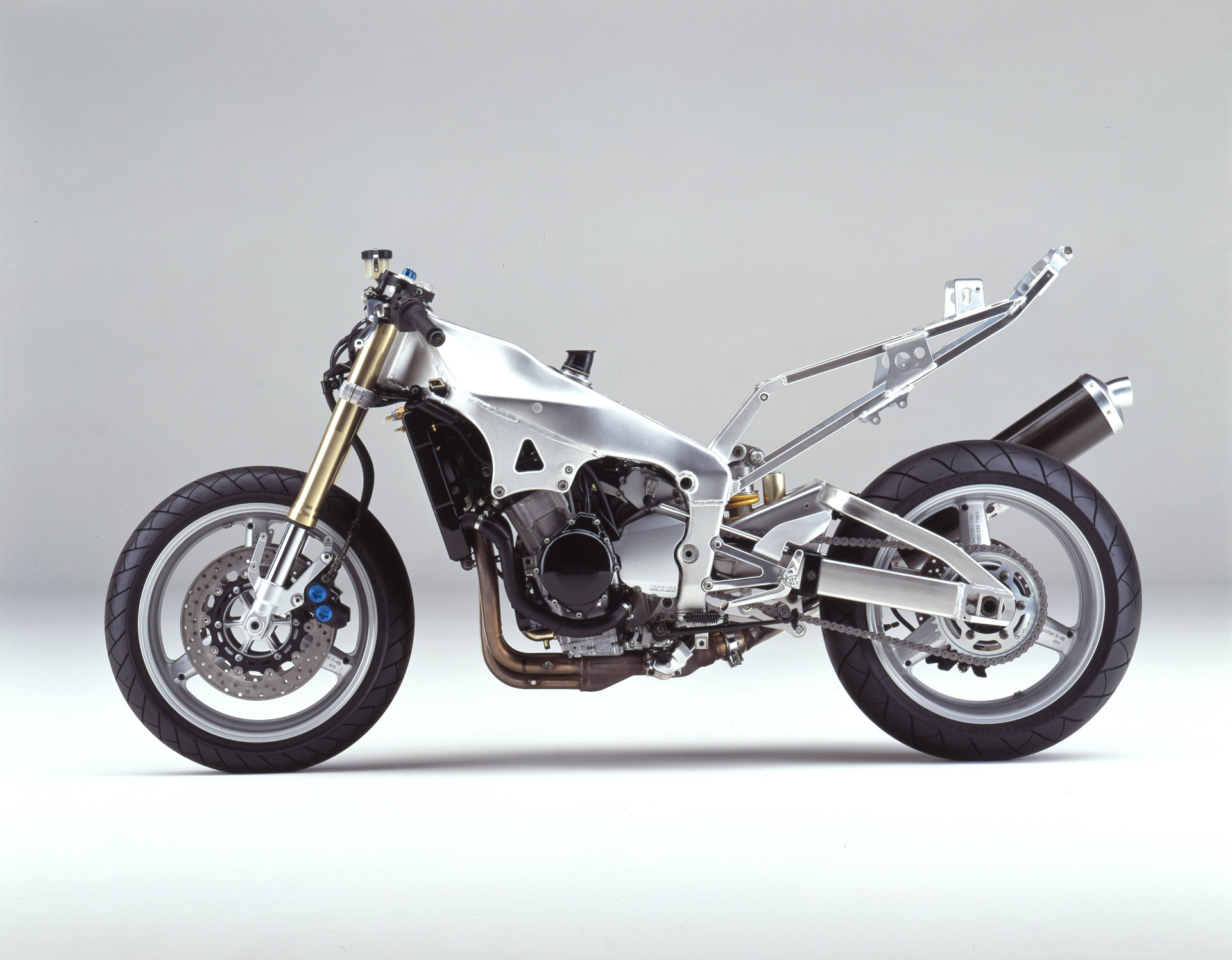
Instead of standard cylinder block bolted to crankcase, cylinder & crankcase are only one part to save weight and increase rigidity, cylinder head cover is made from magnesium. The engine take part in rigidity of the new Deltabox II aluminum frame.
Yamaha created a new gearbox architecture: the transmission shafts are above one another instead of being behind the crankshaft. This shortened the engine length, allowing a much longer swingarm into a compact wheelbase (1395 mm). Engine block is more compact, stiffer and lighter. This design improves agility, traction and stability.
The R1 was also equipped with a 41 mm KYB upside-down front fork and 300 mm semi-floating front disc brakes
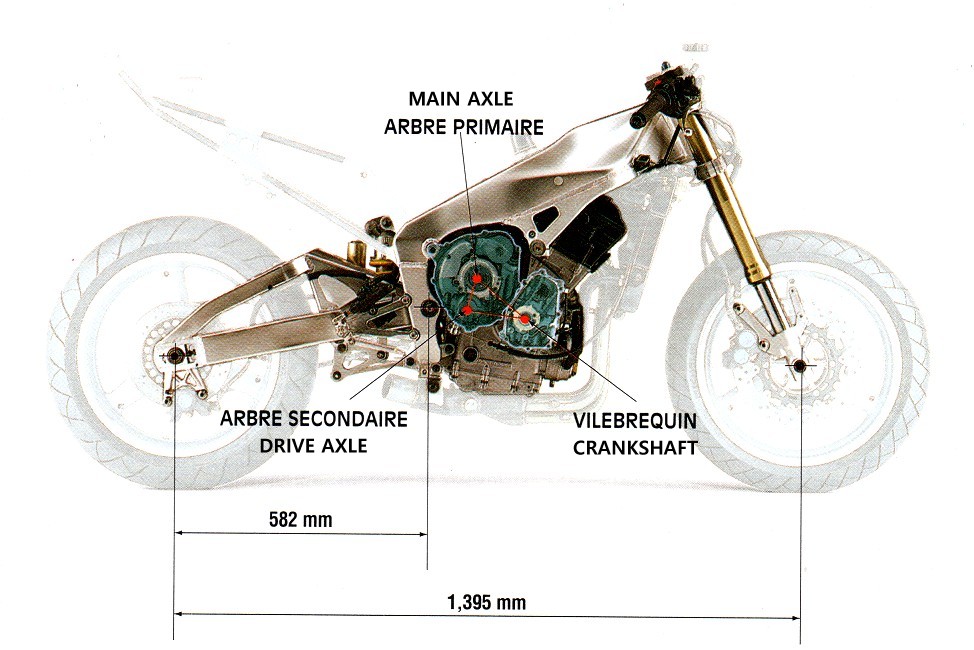
Now this gearox concept has been adopted by most of the other manufacturers
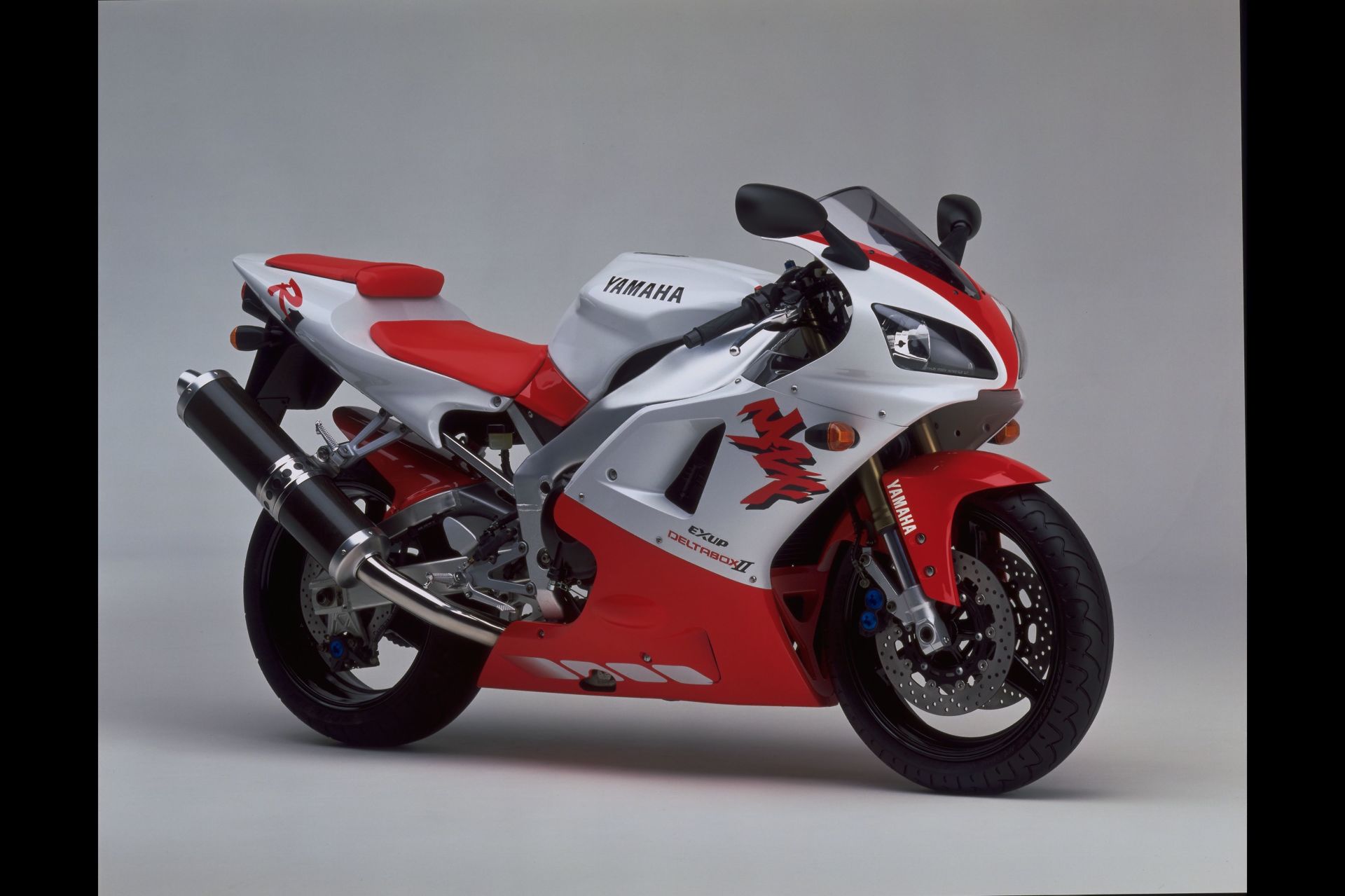
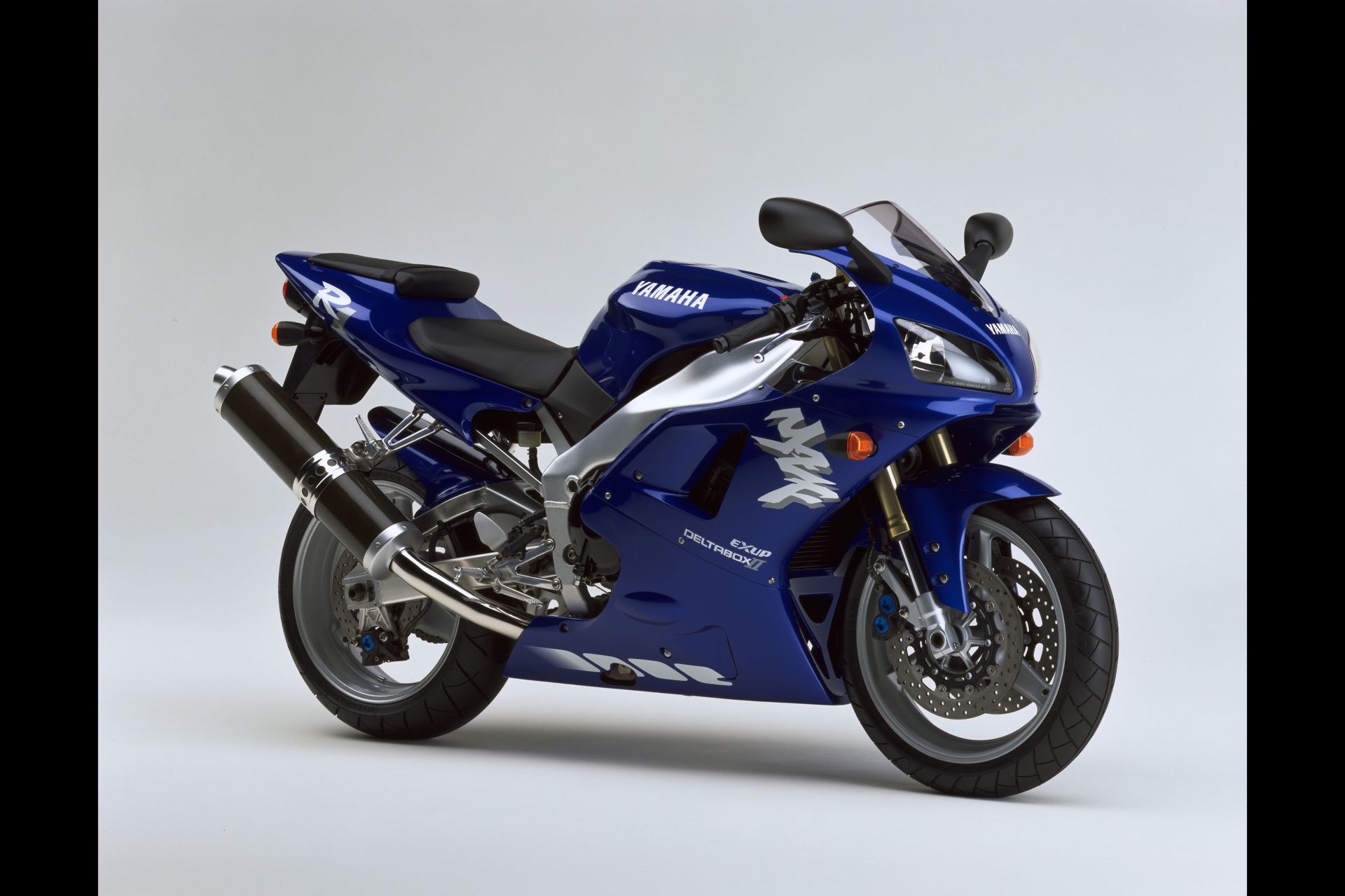
1999 model
New colors, redesigned gear change linkage for smoother gear shifting.
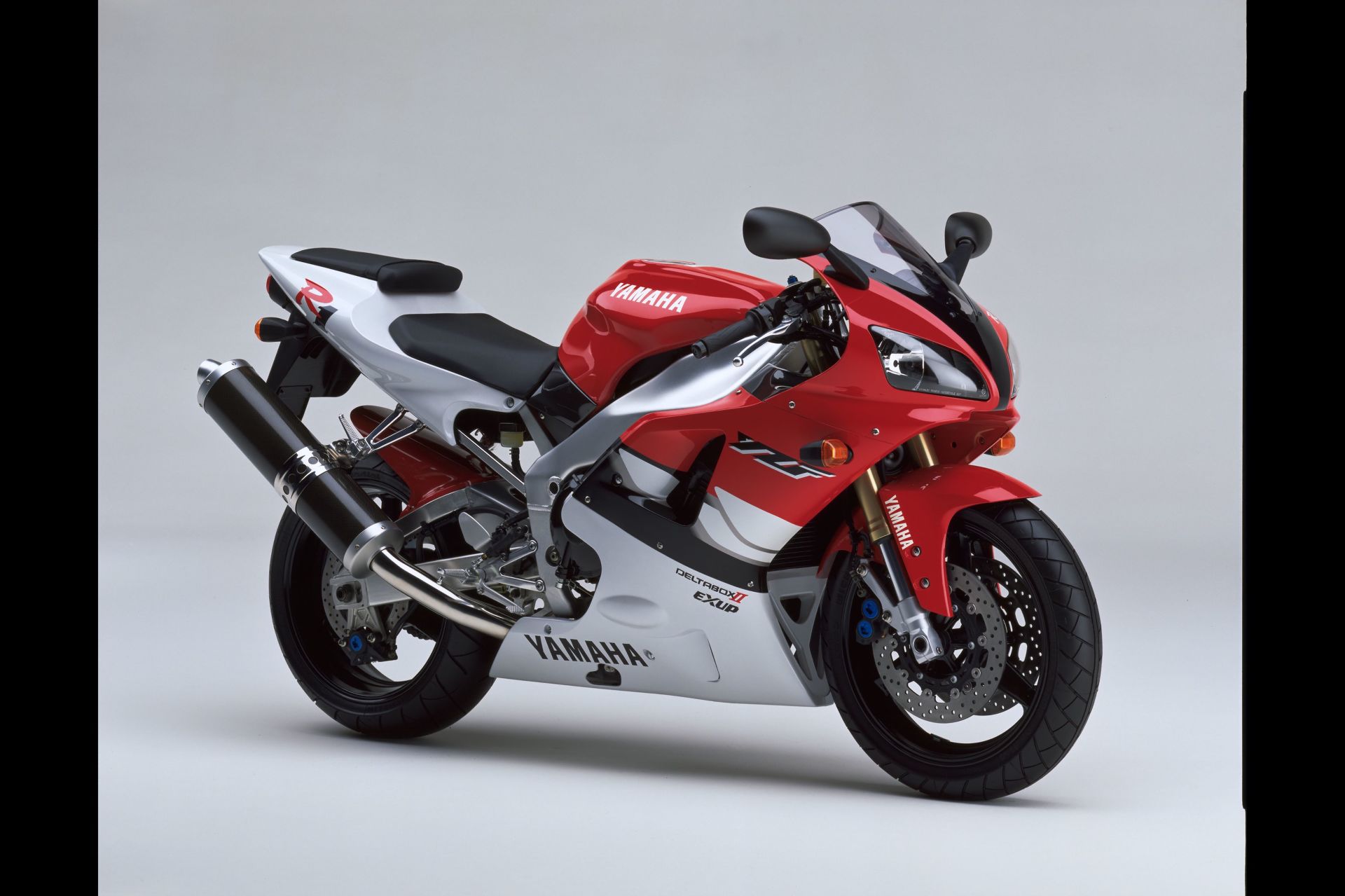
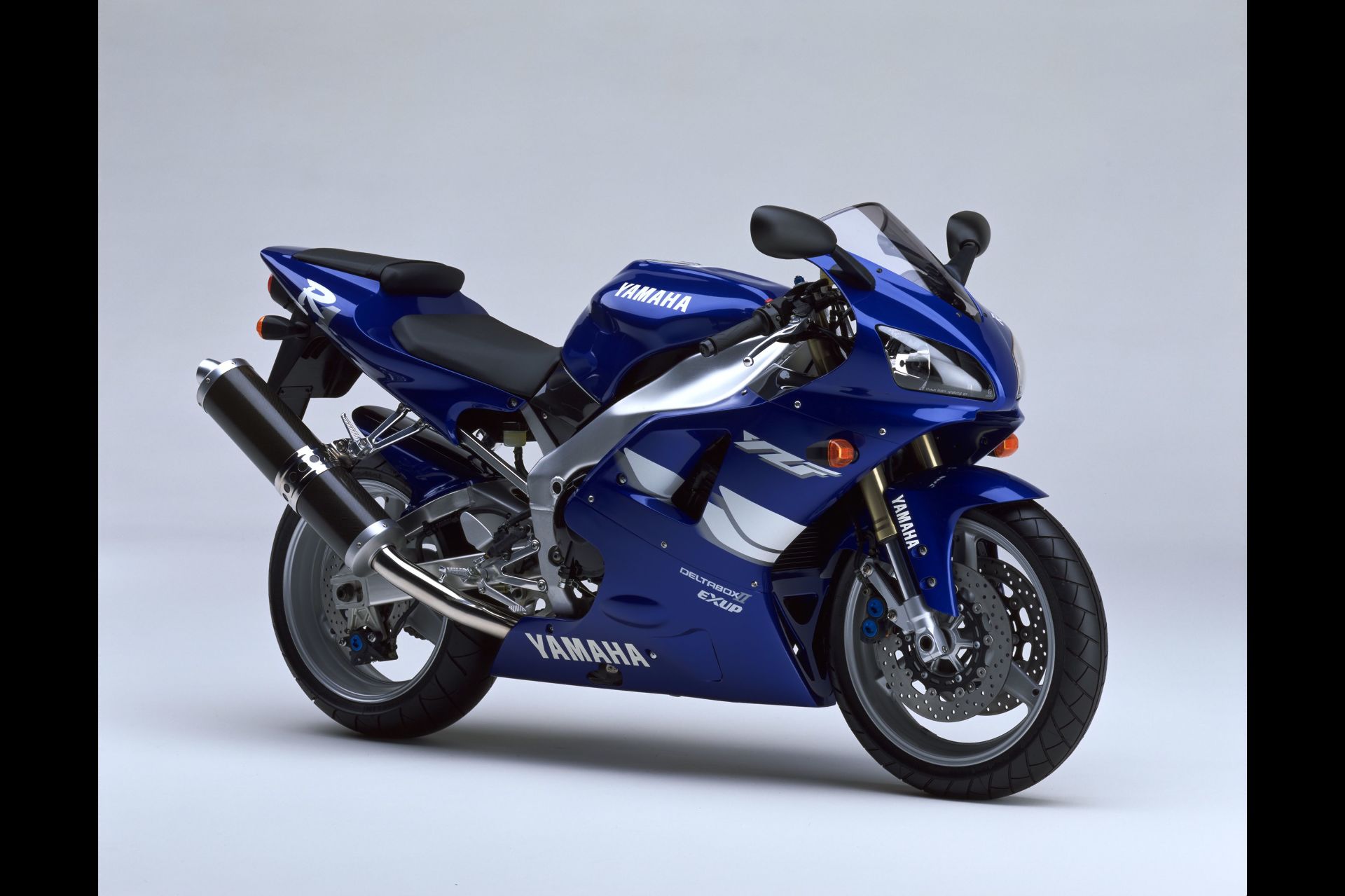
2000 model
New colors
2000 model brings modifications to improve weight, engine emissions , aerodynamics, la douceur/précision de la boite de vitesse, handling and an engine with a more linear response with better traction when exiting corners.
Engine response and traction: New carbs setting & reviewed ignition timing.
Smoother and more precise gearbox: revised gearbox ratio with a longer first gear, transmission elements with a low coefficient of friction, a modified selection system and a clutch cable with reduced friction.
Handling: More progressive fork spring, new stiffer triple T, harder rear shock with better compression setting.
Seat and fuel tank were reshaped for better driver mobility
Aerodynamics: New faring, new front light, new rear mirrors and new screen for better aerodynamics.
Weight: The hunt for weight was continued on numerous components: titanium exhaust silencer, modified rear shock absorber, modified front discs, rear light, mirrors, dashboard, magnesium water pump housing. The gain is 2kg reaching 175 kg dry.
Emissions: To meet EU-1 standards, emissions are reduced by the adoption of the AIS intake system: The system injects air into the exhaust chambers in order to burn excess fuel during deceleration.
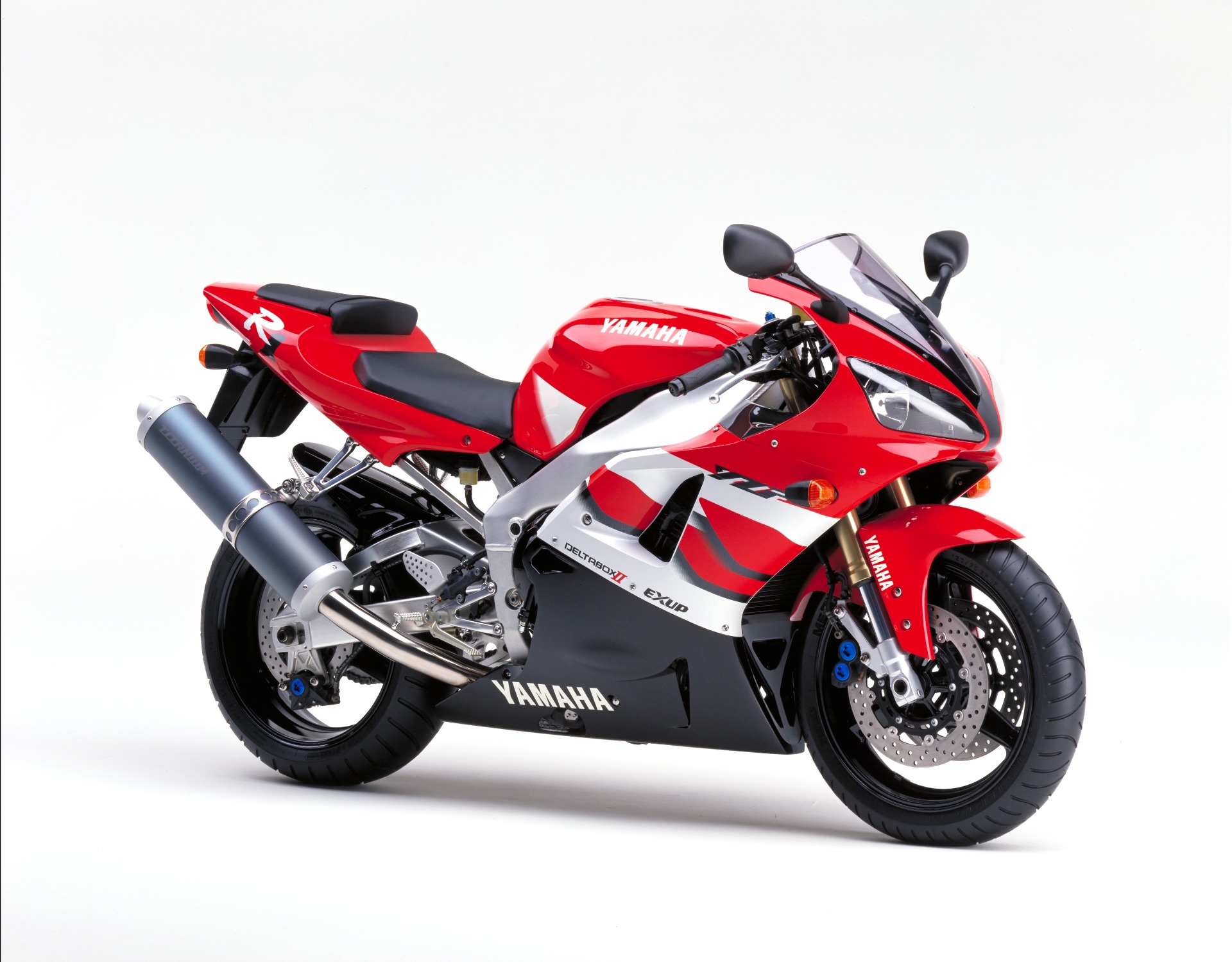
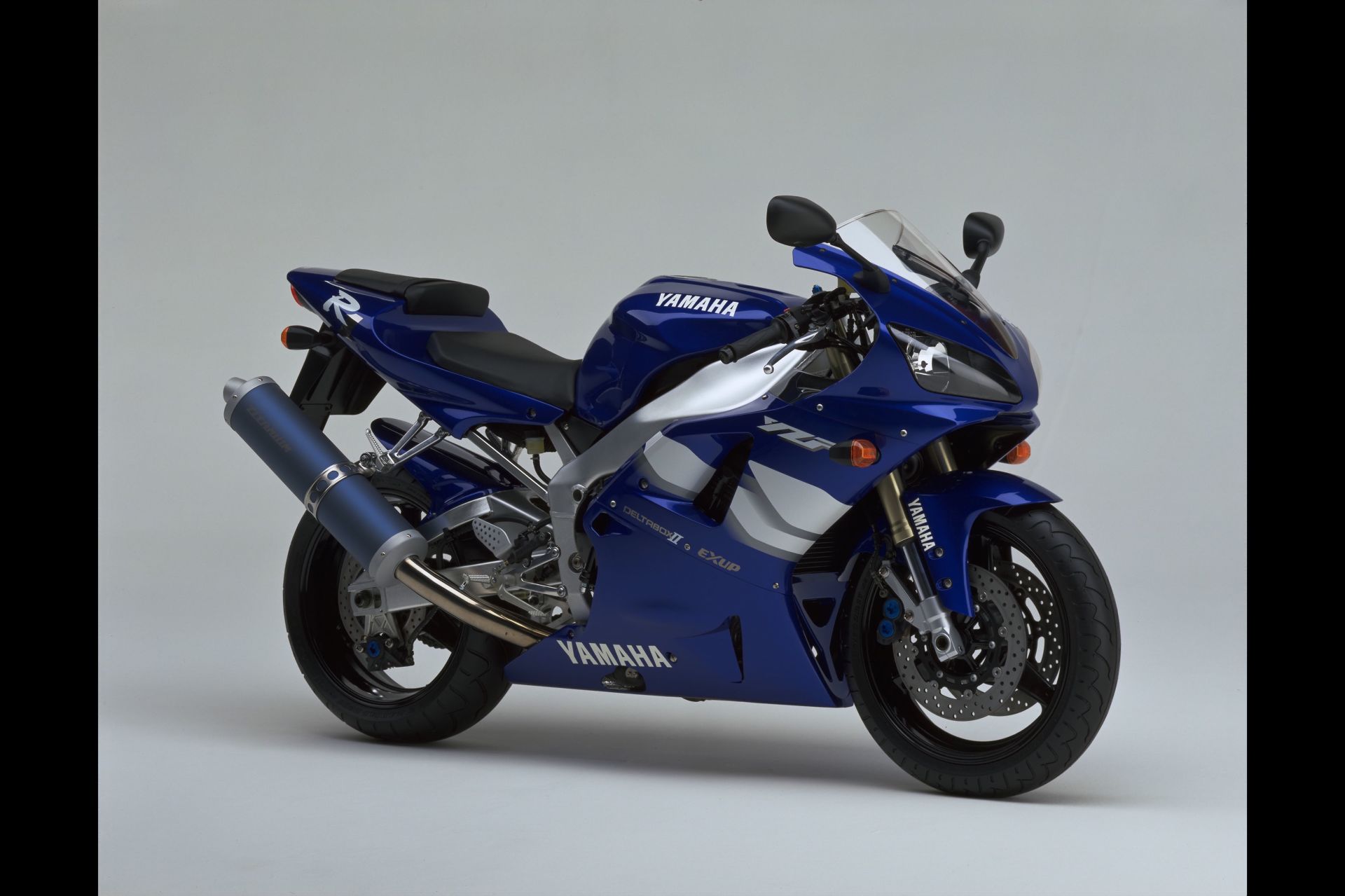
2001 model
New colors, no technical changes
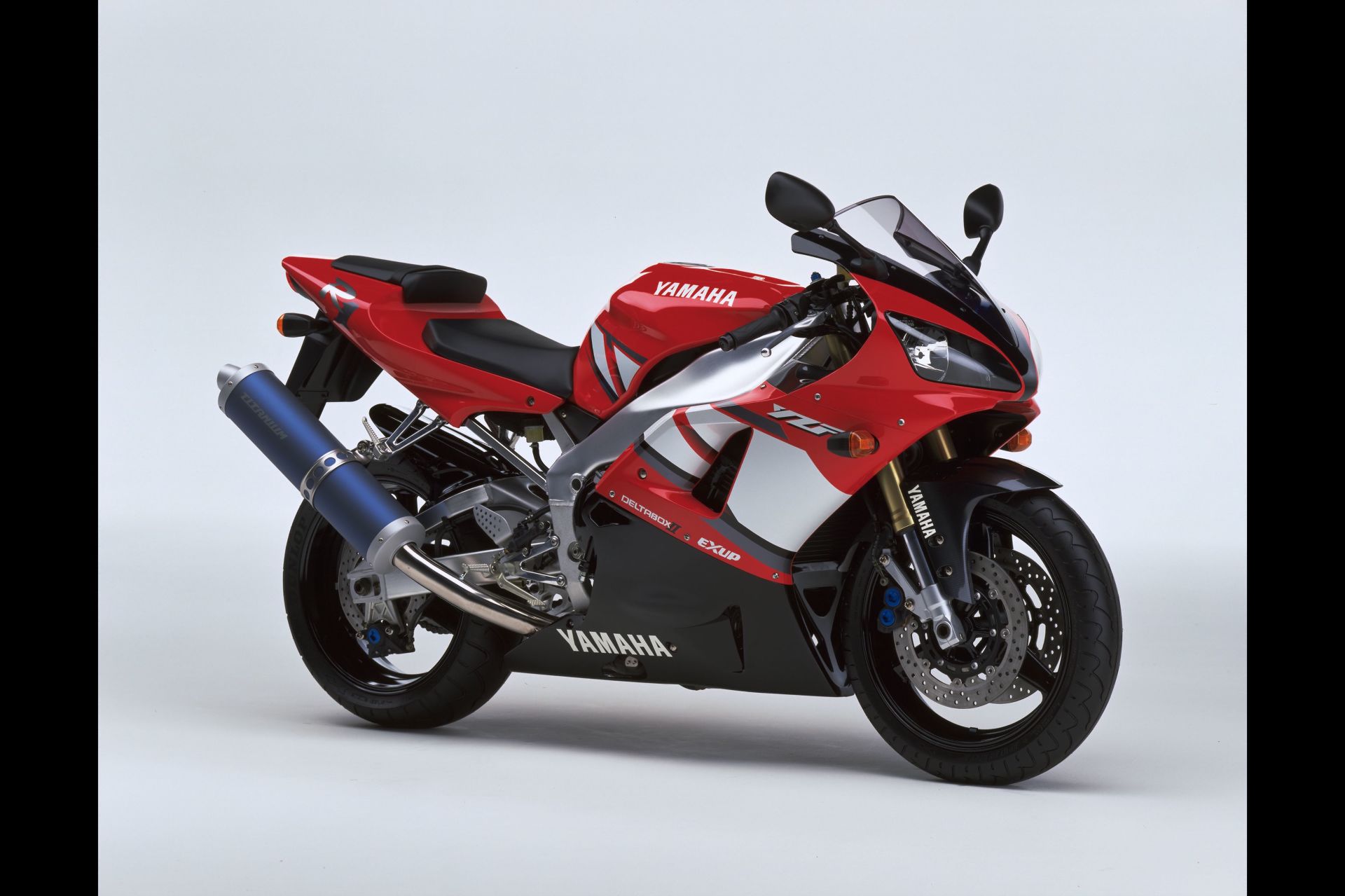
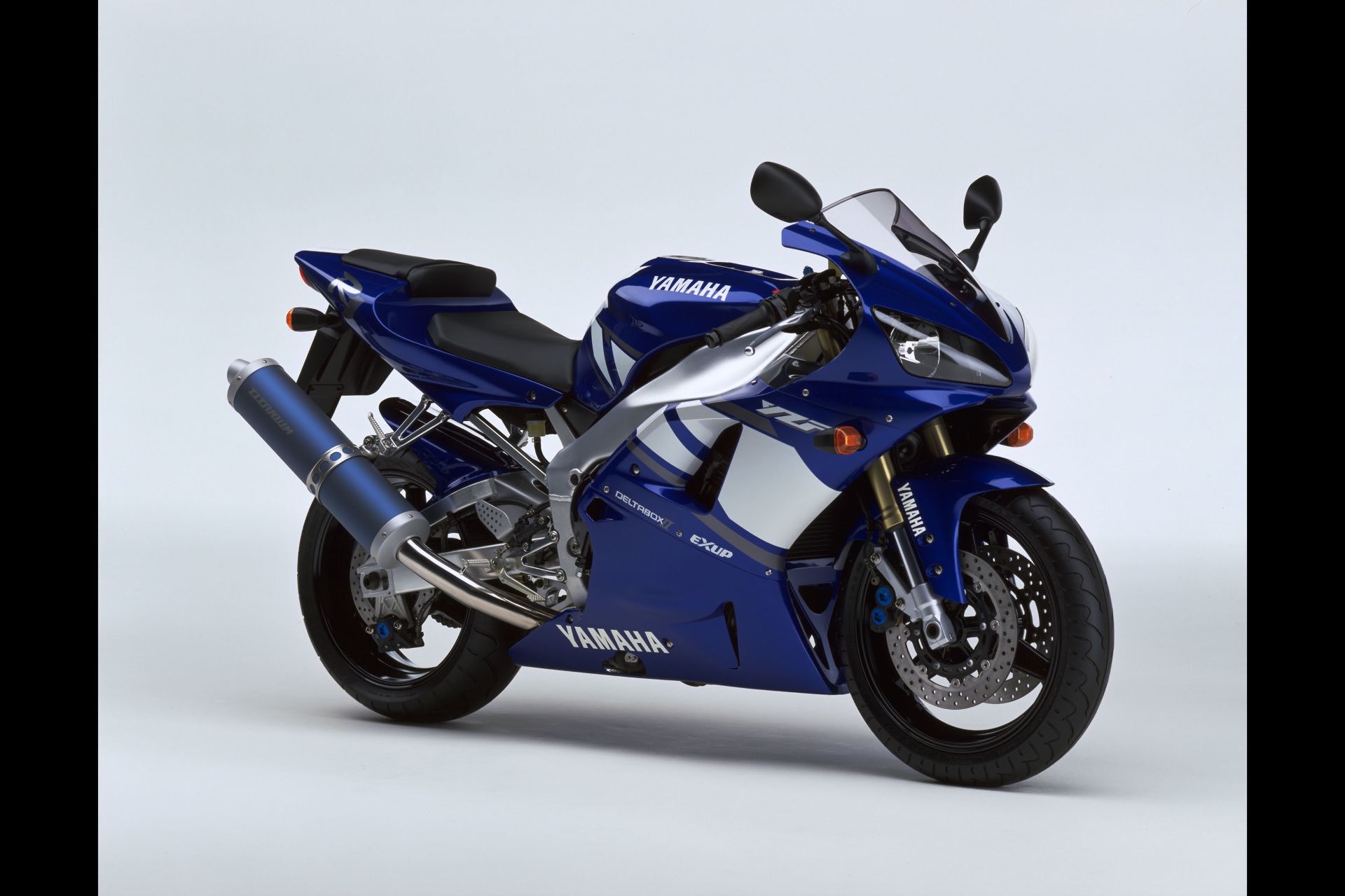
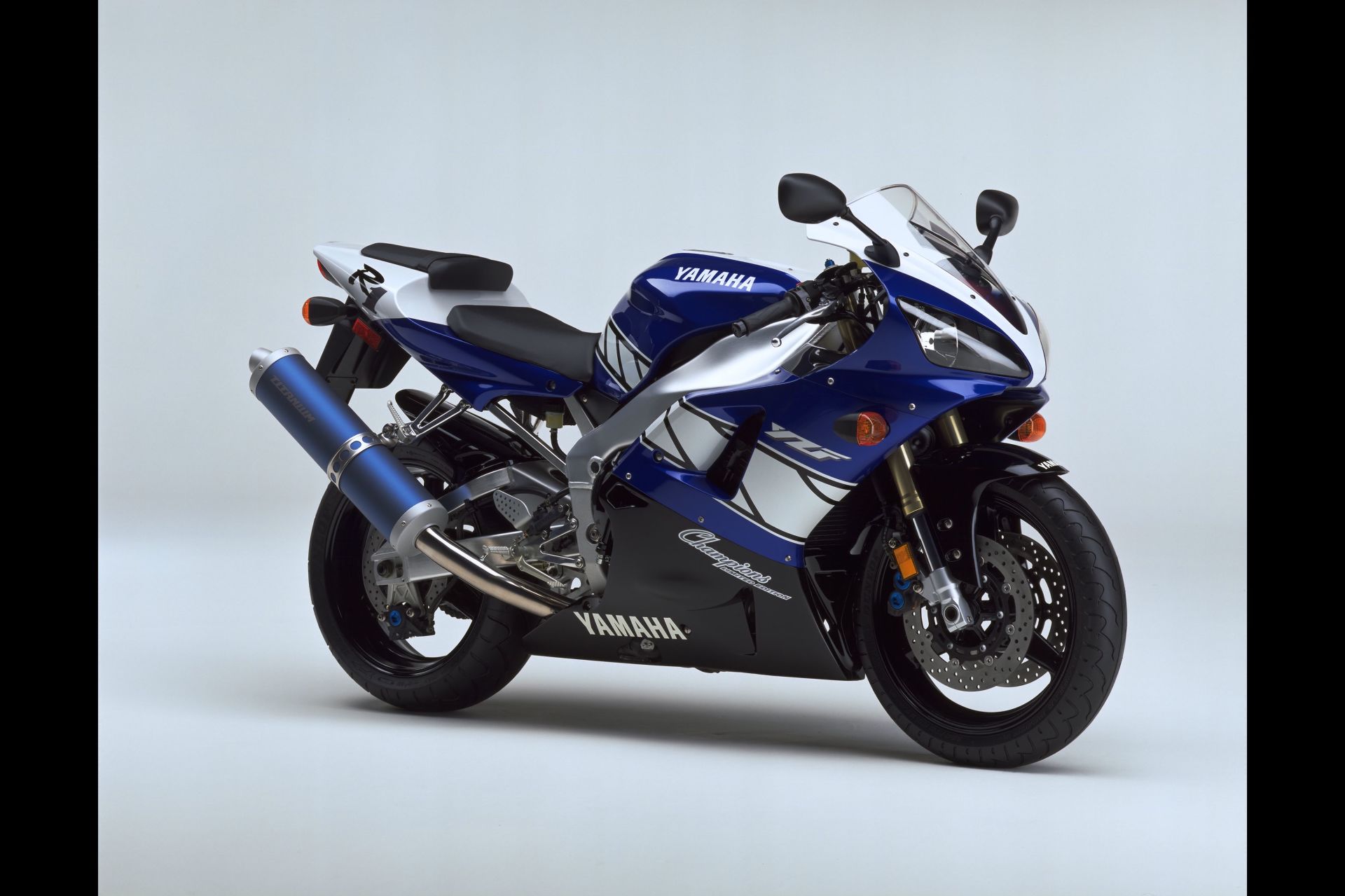
Champions limited edition to 1000 copies, all numbered individually only for Canada & USA
Last year with carburators, the 2002 model will adopt injection to comply with euro 2 emissions laws